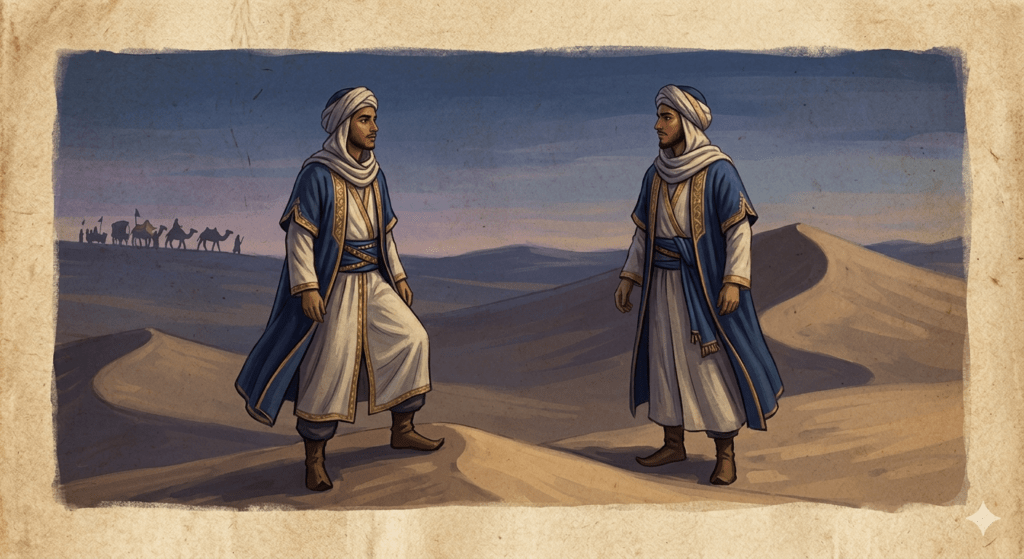
The Flight of the Prince | 王子的逃亡
In the year 786, Idris ibn Abdallah—known to us as Idris I—was having a very bad decade. After a disastrous rebellion against the Abbasid Caliphate in Arabia, he found himself on the run, trading the high-stakes politics of the East for the rugged, unknown landscapes of the West. He crossed thousands of miles of desert, eventually reaching the Maghreb, or modern-day Morocco.
公元786年,伊德里斯·本·阿卜杜拉(也就是我们所熟知的伊德里斯一世)正经历着人生中最糟糕的十年。在反对阿拉伯阿拔斯王朝的起义失败后,他被迫踏上逃亡之路,离开了东方惊心动魄的政治漩涡,投向西方荒凉且未知的土地。他穿越了数千英里的沙漠,最终抵达了马格里布,即今天的摩洛哥。
He wasn’t just a refugee; he was a man with a pedigree and a vision. The local Berber tribes, impressed by his lineage and his charisma, didn’t just give him a place to sleep—they made him their leader. But Idris knew that a true dynasty needed more than just a tent and a title; it needed a heart.
他不仅仅是一个难民,更是一个拥有高贵血统和远大抱负的人。当地的柏柏尔部落被他的出身和魅力所折服,不仅为他提供了栖身之所,还推举他为领袖。但伊德里斯深知,一个真正的王朝不仅需要帐篷和头衔,更需要一颗“心脏”。
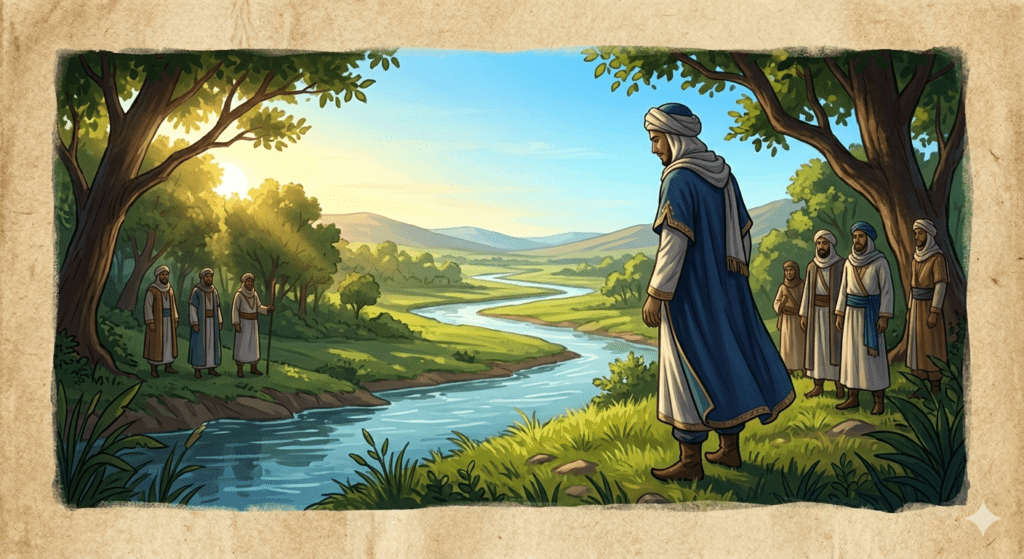
The Valley of Hope | 希望之谷
By 789, Idris was scouting for the perfect spot to build a capital that would rival the greats of the East. He found it in a lush, green valley sliced through by the Jawhar River. It was fertile, well-watered, and strategically perfect.
到了公元789年,伊德里斯开始寻找一个完美的地点来建造首都,希望它能与东方的伟大城市相媲美。他在焦哈尔河穿过的葱郁山谷中找到了理想之地。那里土地肥沃,水源充足,且地理位置极具战略意义。
Standing on the banks of the river, Idris didn’t just command his laborers to start digging while he sat under a shaded canopy. He wanted to be the one to set the destiny of the land into motion. This is where history shifts into the shimmering light of legend.
站在河岸边,伊德里斯并没有躲在遮阳伞下指挥工人们挖掘。他想要亲手开启这片土地的命运。也正是在这里,历史步入了传说那熠熠生辉的光芒之中。
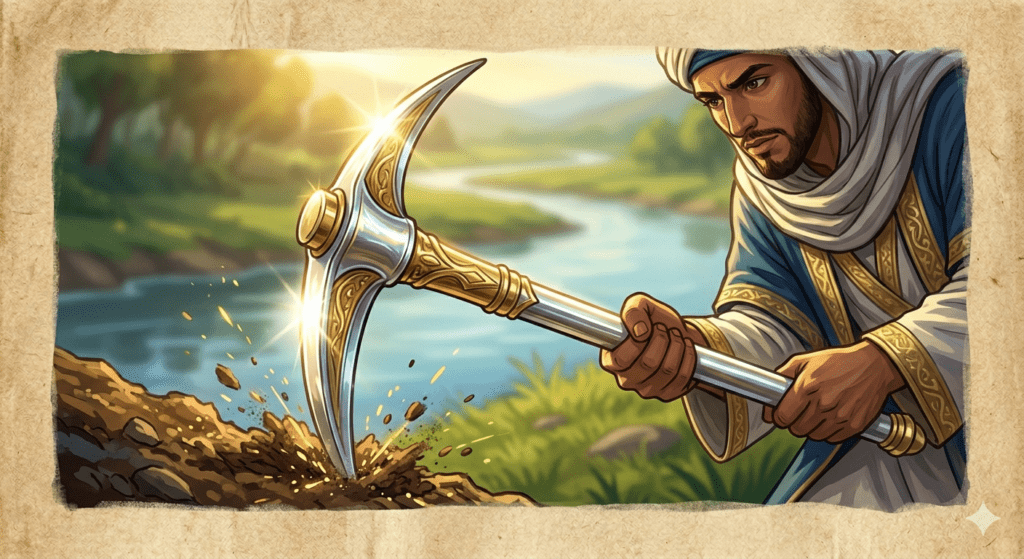
The Legend of the Silver Axe | 银锄的传说
According to the stories told in the bustling souks of Morocco for over a millennium, Idris was handed a magnificent pickaxe to break the ground. It wasn’t made of common iron or crude wood. This tool was forged of pure silver and gold, gleaming under the North African sun like a fallen star.
根据摩洛哥繁华市场中流传了千年的故事,伊德里斯被授予了一把华丽的鹤嘴锄来破土动工。它不是由普通的生铁或粗糙的木头制成的,而是由纯金和纯银锻造而成,在北非的烈日下闪耀着如流星般的光芒。
当伊德里斯用银刃劈开大地时,他划出了未来城墙耸立的轮廓。有人说他在土里挖到了一把巨大的金斧,也有人说那把银锄是他自备的。无论你相信哪个版本,这件工具都定义了这座城市。在阿拉伯语中,“鹤嘴锄”一词读作 “Fa’s” (فاس)。于是,这座城市便被命名为——菲斯。
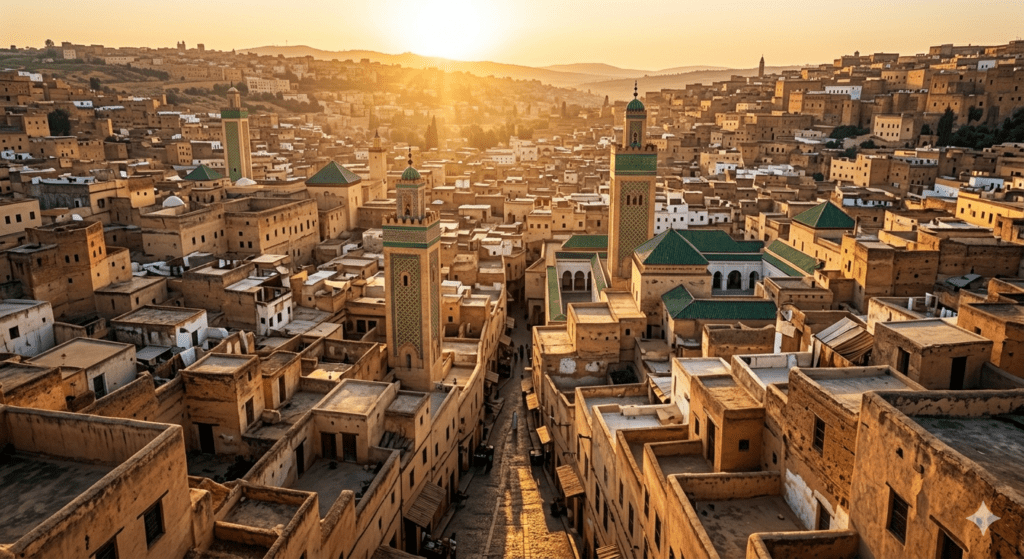
A Legacy in Stone | 石头里的传承
Idris I would not live to see the towering minarets or the world’s oldest university that would eventually call Fez home. He was poisoned shortly after the city’s founding, leaving his young son, Idris II, to finish the masterpiece.
伊德里斯一世没能亲眼看见那些高耸的宣礼塔,也没能看见后来落户菲斯的世界最古老大学。他在城市建立后不久便被毒害,留下他年幼的儿子伊德里斯二世去完成这部杰作。
Today, when you walk through the dizzying, narrow alleys of the Fez Medina, you are walking on ground first broken by a silver axe. It remains a testament to a prince who fled across the world to turn a simple tool into a symbol of a civilization.
今天,当你漫步在菲斯老城那令人目眩的狭窄小巷中时,你正走在当初被银锄劈开的土地上。它依然见证着那位远渡重洋的王子,如何将一件简单的工具变成了一个文明的象征。