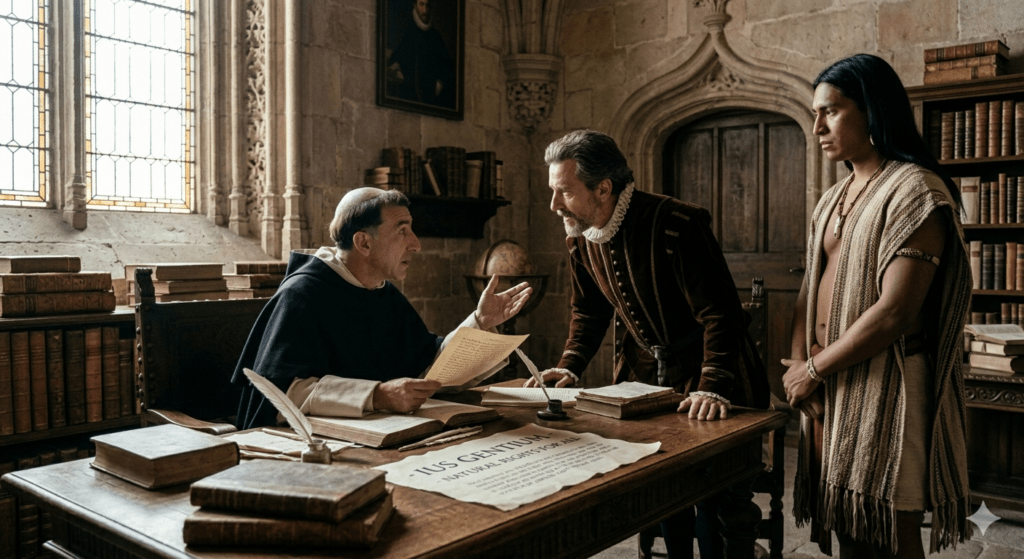
Imagine the year is 1532. In the sun-drenched halls of the University of Salamanca, a group of scholars is about to do something radical: they are going to tell the most powerful empire on Earth that there are rules they cannot break.
The Great Debate | 大辩论
The Spanish Empire was expanding across the Atlantic, and the “New World” brought old questions to the surface. The King’s conquistadors wanted gold; the Church wanted converts. But Francisco de Vitoria, a brilliant professor, stood up in a lecture hall packed with students and posed a question that would change history: “By what right do we rule?”
1532年,在阳光普照的萨拉曼卡大学礼堂里,一群学者正准备做一件惊天动地的事:他们要告诉当时地球上最强大的帝国,有些规则是不能逾越的。随着西班牙帝国向大西洋扩张,“新世界”带来了古老的问题。国王的征服者想要黄金,教会想要信徒。但才华横溢的弗朗西斯科·德·维多利亚教授在挤满学生的教室里提出了一个改变历史的问题:“我们凭什么统治?”
The Birth of “Human” Rights | “人”权的诞生
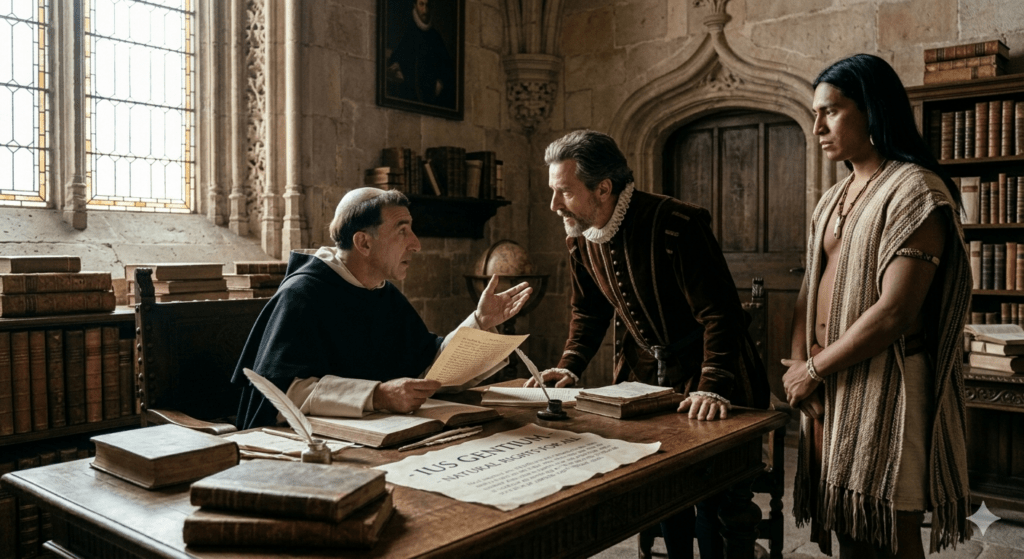
Vitoria didn’t argue from a place of religious dogma. Instead, he argued from “Natural Law.” He told the crown that indigenous peoples were not “sub-human” or “property.” He argued that they were rational beings who owned their land and their lives simply because they were human.
- The Shift: Rights were no longer a gift from a King; they were a part of being human.
- The Result: This was the first time a global power’s own intellectuals claimed that “Universal Human Rights” applied to everyone, everywhere—regardless of their religion or culture.
维多利亚并没有从宗教教条出发,而是基于**“自然法”**进行论证。他告诉皇室,美洲原住民不是“亚人类”或“财产”。他认为,他们是理性的生命,仅仅因为他们是“人”,就拥有自己的土地和生活。权利不再是国王的赏赐,而是人性的一部分。这是全球强国的知识分子首次宣称“普遍人权”适用于每一个人,无论其宗教或文化背景如何。
Freedom of the Seas | 海洋的自由
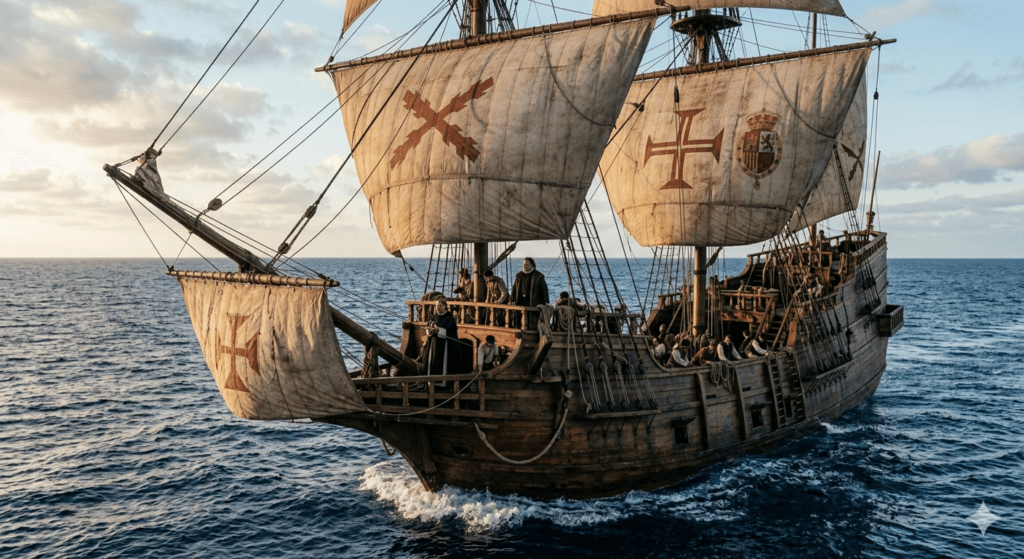
As Spanish galleons began to dominate the trade routes, the School of Salamanca looked at the horizon. They developed the concept of Ius Gentium (the Law of Nations). They argued that the sea was like the air—it belonged to no one and everyone at the same time.
- Maritime Law: They insisted on the “freedom of commerce” and the “right to travel.”
- Just War: They warned that a nation couldn’t just start a war for land; it could only fight to defend these natural rights.
随着西班牙大帆船开始统治贸易航线,萨拉曼卡学派看向了地平线。他们发展了**“万民法”** (Ius Gentium) 的概念。他们认为海洋就像空气一样——它不属于任何人,同时也属于所有人。他们坚持“贸易自由”和“旅行权”。他们警告说,一个国家不能仅仅为了土地而发动战争,只有为了捍卫这些自然权利时,战争才是正义的。
A Modern Legacy | 现代遗产
Fast forward to today. When you look at the UN Charter or the Geneva Convention, you are seeing the echoes of those 16th-century Spanish classrooms. These thinkers set the standards for how nations should treat one another and how every individual, no matter where they are born, is shielded by the law.
- Francisco de Vitoria and his peers were the first to say that the law of the world must be a law for all people.
快进到今天。当你看到**《联合国宪章》或《日内瓦公约》**时,你看到的正是16世纪西班牙课堂的回响。这些思想家为国家间的相处以及如何保护每一个个体(无论出生何处)设定了标准。弗朗西斯科·德·维多利亚和他的同僚们是第一批提出“世界法律必须是适用于所有人的法律”的人。